Ultrasound imaging allows us to look inside your pet's body in a gentle, non-invasive way. This advanced diagnostic tool helps us assess internal organs in real time, complementing X-ray imaging and bloodwork for a complete diagnostic picture.
Ultrasounds are especially useful for evaluating soft tissues and identifying concerns that may not appear on routine exams or blood tests. They are also an essential part of dog breeding and pregnancy monitoring.
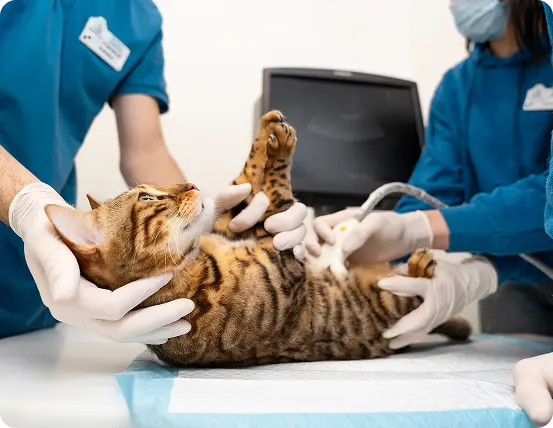
Ultrasound imaging gives us a clearer picture of your pet's internal health, helping us diagnose conditions earlier and plan treatment with confidence, always prioritizing comfort, safety, and clarity for you and your pet.


Yes, it is typically necessary to clip a small area of fur. Ultrasound waves do not travel effectively through air pockets or thick coats; direct contact between the skin, acoustic gel, and the probe is essential to capture clear diagnostic images.
No, ultrasound is a non-invasive and painless imaging modality. It evaluates internal structures using non-harmful high-frequency sound waves and causes no physical discomfort to your dog or cat.
Most dogs and cats do not require sedation and remain comfortable and relaxed with gentle handling and positioning mats. A mild sedative may be recommended only if a patient experiences significant anxiety or acute physical pain, helping to ensure their comfort.
Ultrasound images are routinely submitted to a board-certified veterinary radiologist for a comprehensive final review and formal report.
If we are scanning your pet's abdomen, fasting (such as skipping breakfast) is generally recommended. A stomach containing food or excess gastrointestinal gas can obstruct the veterinary team's view of surrounding internal organs.